





Some food tastes like home the moment you open the jar. The smell reaches you first, and then a memory. It might be your grandmother's kitchen or a summer afternoon with a plate of rice and pickle.
That feeling is not an accident. It comes from the way homely food is made. Here is what makes it special, and how you can bring a little of it into your own pantry.
What "homely" really means
Homely does not mean plain. It means made with care, by a person who knows the food and the people who will eat it.
First, it means small batches. A home cook makes a little at a time, so she can watch every step and fix it as she goes. Nothing is rushed to fill a big order.
Second, it means family recipes. Most home cooks learned from a mother, an aunt or a neighbour. No two families make a dish the same way, and that is the charm. One adds a little more tamarind. Another roasts the spices a touch longer.
Third, it means no shortcuts. Good ingredients, time and attention do the work that artificial preservatives and colours try to do in factory food.
The skills passed down
Ask a home cook for her recipe and you will often hear, "a little of this, a little of that." Behind those words is a lot of skill, learned by watching and doing.
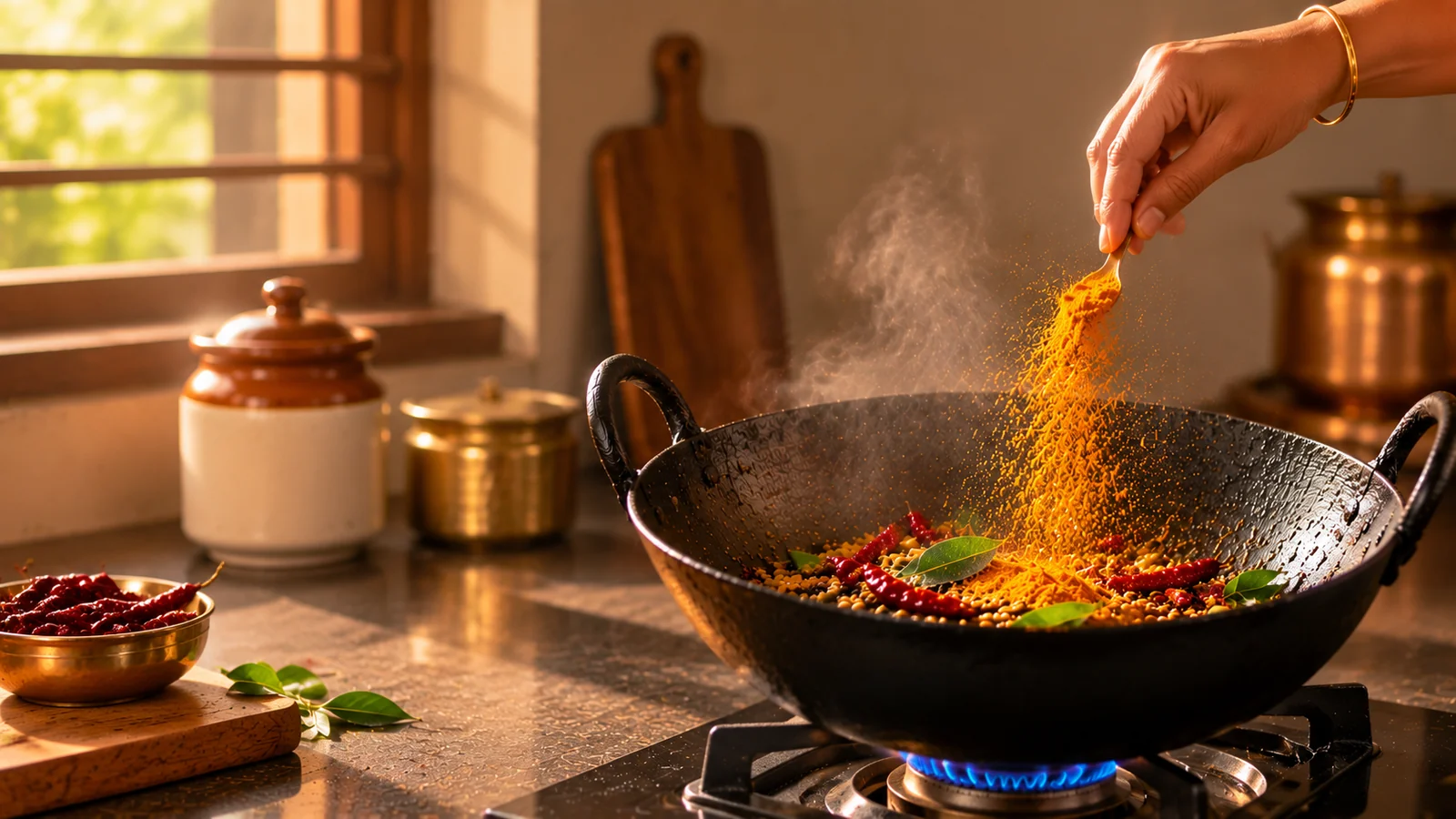
- Grinding spices fresh. Whole spices are roasted and ground when needed. The smell that fills the kitchen is the first sign of a good powder.
- Judging by smell and colour. A home cook knows when the mustard seeds are ready, or when the oil is just right, without looking at a clock. She trusts her nose and eyes.
- Patience. Pickles rest in the sun. Sweets are stirred slowly until they come together. Some things cannot be hurried, and a good cook knows it.
These skills do not come from a book. They come from years in the kitchen, and they are the reason homemade food tastes the way it does.
The pantry that cooks for you
Not every day has time for a long cook. That is where a well-stocked pantry helps. A few homemade products that keep well can turn a simple meal into something special.
- Pickles. A spoonful beside plain rice, curd or a hot chapati lifts the whole plate.
- Spice powders. Sambar powder, rasam powder, chutney powder and more. They bring a home cook's blend to your own stove.
- Sweets. Made the traditional way, they are lovely for tea time, festivals and gifts.
- Snacks. Murukku, chips and mixtures made in small batches are ready whenever guests walk in.
When you choose homemade food products, a few simple checks help:
- Read the ingredients. A short list of names you know is a good sign.
- Look for a clear description of what the product is and how it is made.
- Check that the jar or pack is sealed and neatly labelled.
- Choose a maker you can learn something about. A real person behind the product is a good sign.
Simple habits that protect the taste
Once a good jar of pickle or powder is in your kitchen, a few small habits help it stay at its best.
- Use clean, dry jars. Water is the enemy of most pantry foods. Wash jars well and let them dry fully before you fill them.
- Store in a cool, dry place. Keep jars away from the stove, the sink and direct sunlight.
- Always use a clean, dry spoon. A wet or used spoon can spoil a whole jar.
- Close the lid tightly. Do this every time, so the smell and flavour stay inside.
- Follow the maker's storage note. Each product is a little different, and the person who made it knows it best.
These habits cost nothing, and they let you enjoy every spoonful the way the maker meant you to.
Homemade food, all in one place
Finding real homemade food used to mean knowing the right neighbour. Homakes brings homemade food products from homemakers together in one place, so you can discover pickles, powders, sweets and snacks made with care, the way they are made at home.
And if you are a home cook whose recipe people keep asking for, we would love to meet you. Join Homakes as a partner and share your kitchen's best with more people.